
HOW COMPRESSORS ARE USED IN TEXTILE SPINNING, WEAVING & AIR-JET LOOMS
Massive continuous CFM delivery engineered for textile mills running 24/7. Powers high-speed air-jet looms, yarn texturizing, autoconers, and blowroom machinery.
The Critical Role of Compressed Air in Textile Spinning, Weaving & Air-Jet Looms
In modern textile weaving sheds, air-jet looms represent one of the most compressed-air-intensive manufacturing processes on earth. A shed with 100 high-speed air-jet looms (such as Toyota or Tsudakoma) requires an astonishing 3,500 to 5,000 CFM of compressed air running non-stop 24 hours a day, 365 days a year. Compressed air is pulsed through main nozzles and relay nozzles across the weaving reed at supersonic speeds (up to 1,200 insertions per minute), carrying the weft yarn across the fabric shed without mechanical shuttles. In spinning and autoconer winding, compressed air operates pneumatic yarn splicers that untwist, intermingle, and retwist broken yarn ends invisibly with 95% of original yarn strength.
Key Plant Machinery & Pneumatic Operations Powered:
Recommended Sarv Jagat Machinery Package
Sarv Jagat SJ RF100 / SJ RF150 Heavy Duty Direct Drive with Master Multi-Sequencer
Turnkey skid-mounted package with multi-stage high-efficiency coalescing filters, dual micro-porous pre-filters, and automatic zero-air-loss moisture drains.
STEP-BY-STEP PROCESS WORKFLOWS IN TEXTILE SPINNING, WEAVING & AIR-JET LOOMS
Detailed examination of where and how compressed air powers each critical stage of the production floor, from raw material handling to final quality testing.
Air-Jet Loom Weft Insertion
Solenoid-controlled main and relay nozzles fire timed air pulses across the weaving reed width to propel polyester, cotton, or denim weft yarns at 1,000+ RPM.
Autoconer Pneumatic Yarn Splicing
Micro-blast vortex chambers untwist broken yarn strands with air turbulence and interlace the individual fibers together without knots.
Blowroom Fiber Transport & Suction Cleaning
Transports raw cotton bales through ductwork, operates automated roving bobbin changers, and cleans traveling lint waste collectors.
ISO 8573-1 Air Purity Specification for Textile Spinning, Weaving & Air-Jet Looms
Plant air must adhere strictly to international purity thresholds to prevent expensive batch rejections, cylinder corrosion, and valve sticking.
Dual high-porosity sub-micron pre-filters eliminate microscopic dust particles, keeping pneumatic solenoids and servo valves operating with zero friction.
Guarantees no liquid water condensation inside the air network, preventing line rusting, painting blisters, and ice formation in refrigerated sections.
Multi-stage coalescing filtration and activated carbon towers ensure clean, vapor-free discharge compliant with strictest hygiene standards.
WHY ROTARY SCREW TECHNOLOGY IS ESSENTIAL IN TEXTILE SPINNING, WEAVING & AIR-JET LOOMS
Discover why leading industrial facilities replace legacy reciprocating pistons with Sarv Jagat continuous-duty rotary screw compressors.
Engineering Advantage #1
100% continuous duty rating engineered for non-stop operation 8,760 hours per year without overheating.
Engineering Advantage #2
Oversized heavy-duty air intake filters capture airborne cotton lint and micro-fluff before it reaches rotor chambers.
Engineering Advantage #3
Lowest specific power consumption (kW/100 CFM) saves millions of rupees in electrical bills in massive textile mills.
RECOMMENDED COMPRESSOR MODELS FOR TEXTILE SPINNING, WEAVING & AIR-JET LOOMS
Click on any model below to view full engineering specifications, CAD dimensions, and air consumption sizing.
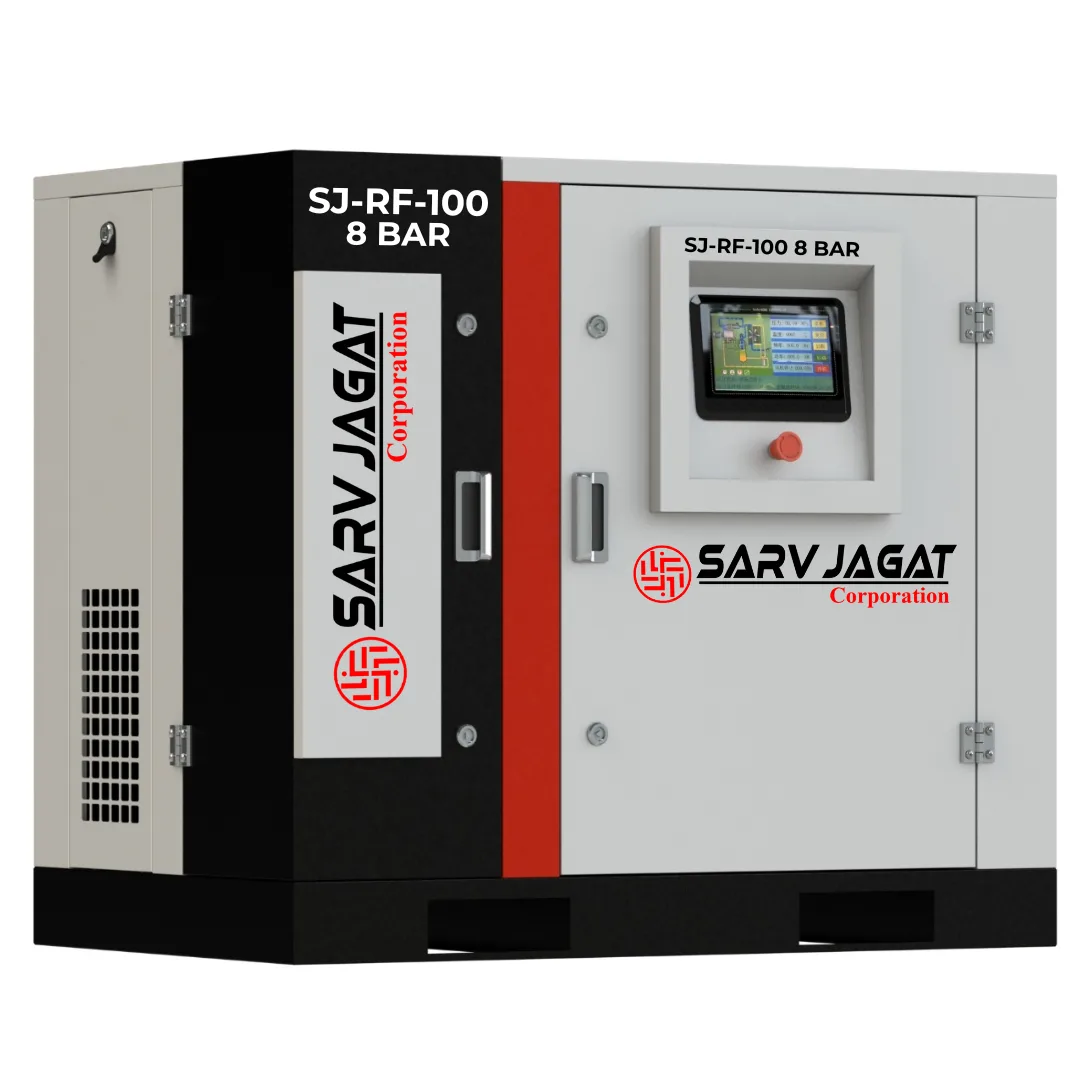
100 HP 8 Bar SJ Fixed Speed Screw Air Compressor
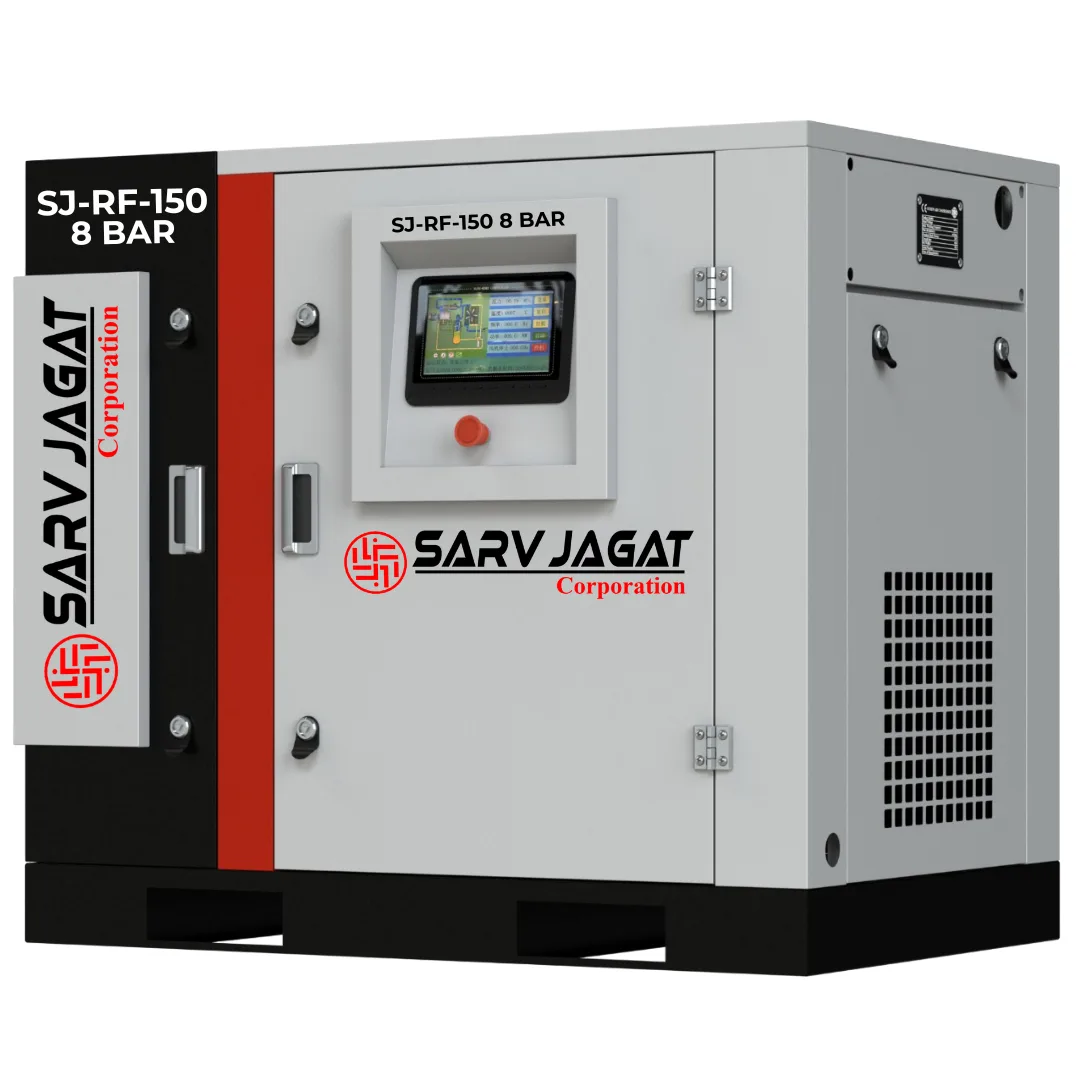
150 HP 8 Bar SJ Fixed Speed Screw Air Compressor
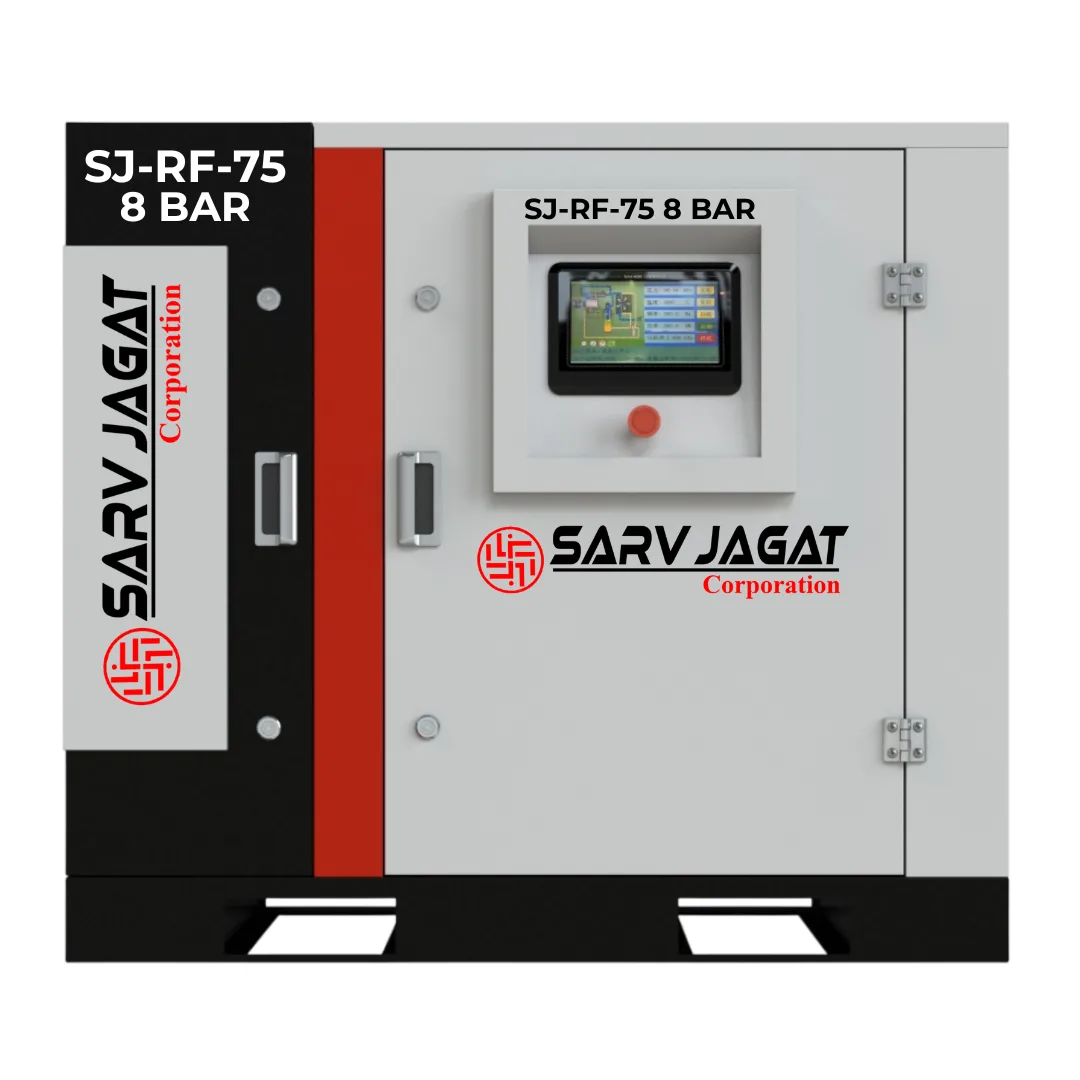
75 HP 8 Bar SJ Fixed Speed Screw Air Compressor
TECHNICAL FAQS: TEXTILE SPINNING, WEAVING & AIR-JET LOOMS
Frequently encountered questions regarding air purity, pressure stability, and compressor sizing for this sector.
Q1:How much CFM does one air-jet loom consume?
Modern air-jet looms consume between 35 and 55 CFM (1.0 to 1.5 m³/min) each at 7 Bar, depending on fabric width (190cm to 340cm) and loom insertion speed (800 to 1,200 RPM).
Other Industries Powered by Sarv Jagat
Need Turnkey Engineering for Your Textile Spinning, Weaving & Air-Jet Looms Facility?
Our engineering team conducts free air audits, calculates pressure-drop curves, and recommends custom dual-voltage (380V/415V/460V, 50/60Hz) packages ready for containerized sea shipment worldwide.