
HOW COMPRESSORS ARE USED IN GLASS, CERAMICS & REFRACTORY KILNS
Designed for high ambient kiln surroundings. Provides continuous mould cooling air, ceramic tile hydraulic press actuation, and glass container blow shaping.
The Critical Role of Compressed Air in Glass, Ceramics & Refractory Kilns
Glass container factories and ceramic porcelain tile plants operate around-the-clock near massive kilns where ambient temperatures frequently exceed 45°C to 50°C. In glass container production, individual section (IS) forming machines take molten glass gobs at 1,100°C and use compressed air for shearing, plunger cooling, and final blow-molding into glass beverage bottles and pharmaceutical vials. In ceramic tile manufacturing, high-pressure hydraulic presses stamp dry ceramic powder into dense green tiles, while compressed air operates reciprocating feeder carriages, tile transfer suction cups, and spray atomizers that apply protective glazes and decorative inkjet inks.
Key Plant Machinery & Pneumatic Operations Powered:
Recommended Sarv Jagat Machinery Package
Sarv Jagat SJ RF50 / SJ RF100 with Tropicalized Aluminum Heat Exchangers
Turnkey skid-mounted package with multi-stage high-efficiency coalescing filters, dual micro-porous pre-filters, and automatic zero-air-loss moisture drains.
STEP-BY-STEP PROCESS WORKFLOWS IN GLASS, CERAMICS & REFRACTORY KILNS
Detailed examination of where and how compressed air powers each critical stage of the production floor, from raw material handling to final quality testing.
Glass IS Machine Parison Blow-Shaping
Directs compressed air through blowhead nozzles into blank and blow moulds to shape molten glass into bottles at rates up to 600 BPM.
Ceramic Hydraulic Press Powder Feeder Carriage
Pneumatic cylinders sweep powder grid carriages across massive 5,000-ton hydraulic press dies to deposit uniform clay powder layers.
Ceramic Glaze Atomization & Tile Suction Grippers
Atomizes liquid silica and mineral glazes onto tile surfaces and utilizes pneumatic suction arrays to transfer green tiles onto kiln cars.
ISO 8573-1 Air Purity Specification for Glass, Ceramics & Refractory Kilns
Plant air must adhere strictly to international purity thresholds to prevent expensive batch rejections, cylinder corrosion, and valve sticking.
Dual high-porosity sub-micron pre-filters eliminate microscopic dust particles, keeping pneumatic solenoids and servo valves operating with zero friction.
Guarantees no liquid water condensation inside the air network, preventing line rusting, painting blisters, and ice formation in refrigerated sections.
Multi-stage coalescing filtration and activated carbon towers ensure clean, vapor-free discharge compliant with strictest hygiene standards.
WHY ROTARY SCREW TECHNOLOGY IS ESSENTIAL IN GLASS, CERAMICS & REFRACTORY KILNS
Discover why leading industrial facilities replace legacy reciprocating pistons with Sarv Jagat continuous-duty rotary screw compressors.
Engineering Advantage #1
Oversized bar-plate coolers keep oil temperature stable even in 50°C plant ambient near glass furnaces.
Engineering Advantage #2
Continuous 100% duty cycle rating prevents glass IS machine halts that would cause molten glass freeze-ups.
Engineering Advantage #3
Heavy-duty cast iron chassis resists high thermal expansion stresses.
RECOMMENDED COMPRESSOR MODELS FOR GLASS, CERAMICS & REFRACTORY KILNS
Click on any model below to view full engineering specifications, CAD dimensions, and air consumption sizing.
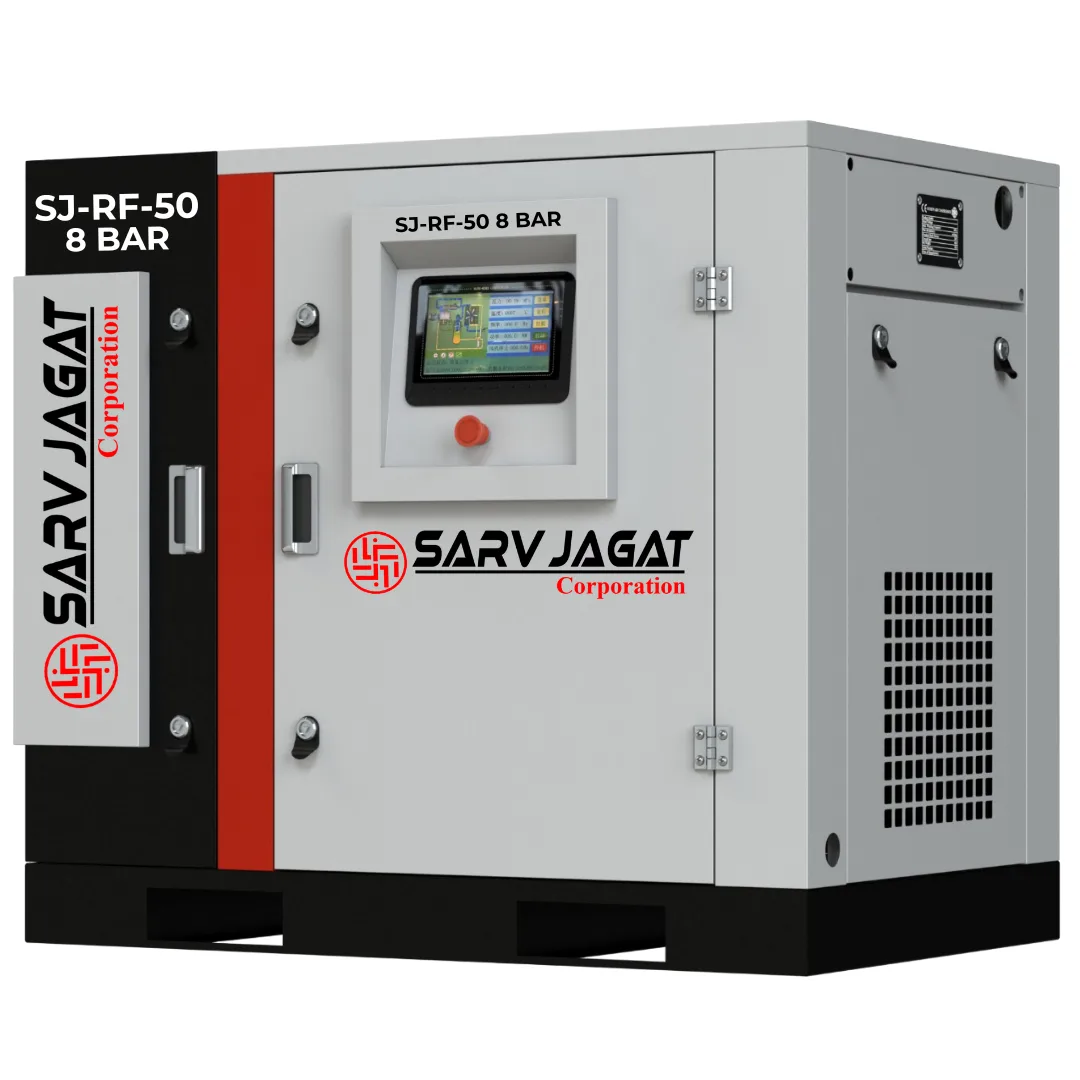
50 HP 8 Bar SJ Fixed Speed Screw Air Compressor
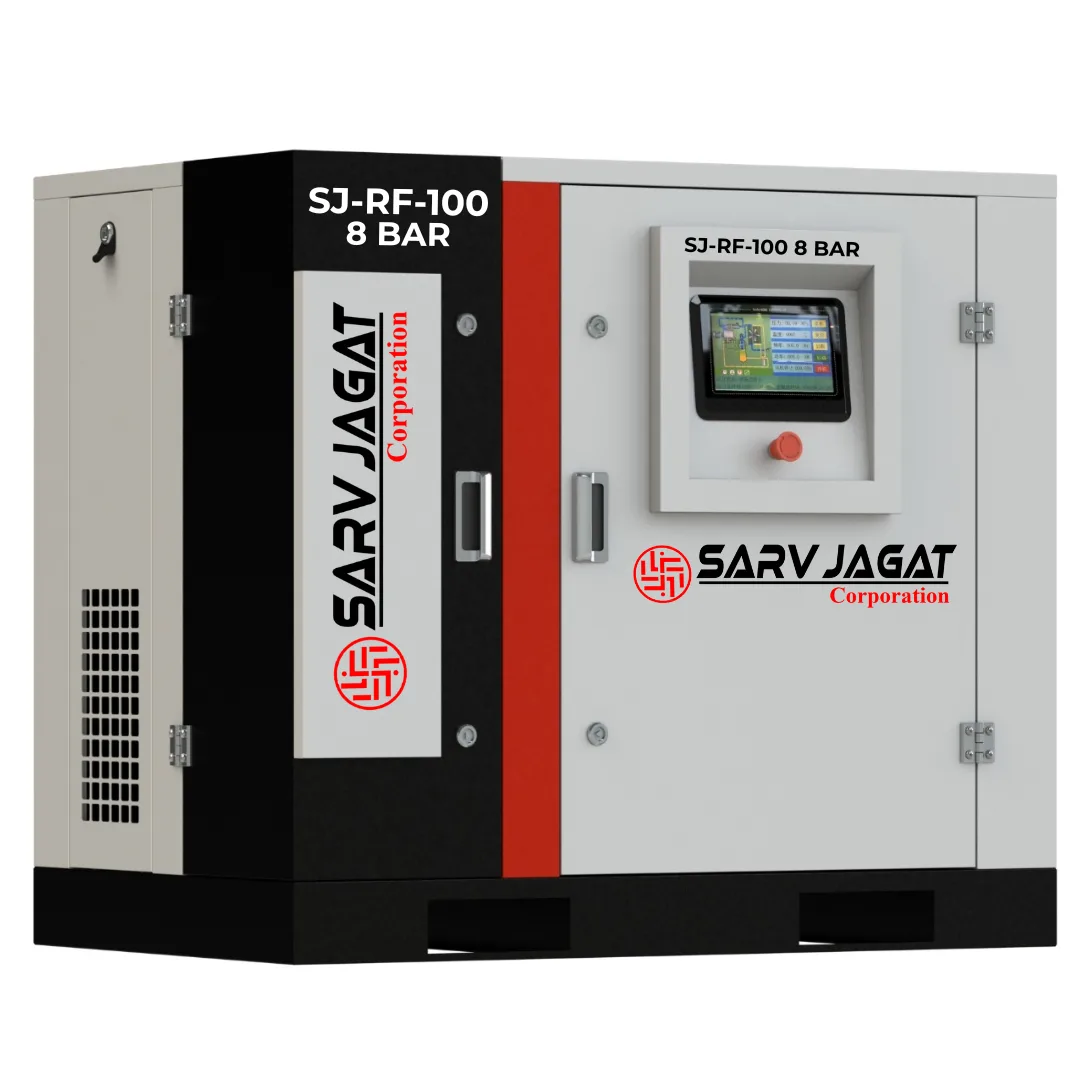
100 HP 8 Bar SJ Fixed Speed Screw Air Compressor
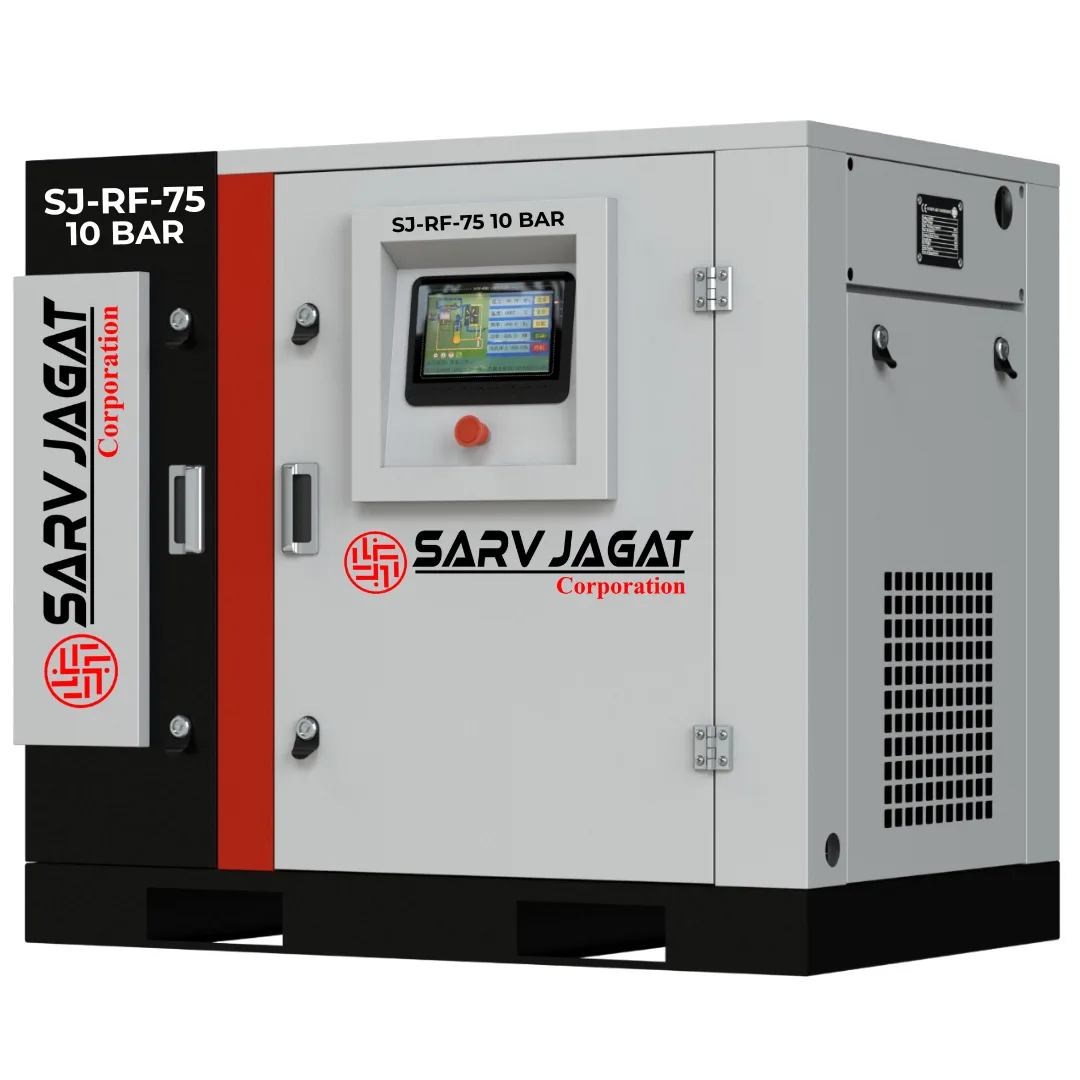
75 HP 10 Bar SJ Fixed Speed Screw Air Compressor
TECHNICAL FAQS: GLASS, CERAMICS & REFRACTORY KILNS
Frequently encountered questions regarding air purity, pressure stability, and compressor sizing for this sector.
Q1:Why does glass manufacturing require continuous non-stop compressed air?
If compressed air fails for even two minutes on a glass IS machine, molten glass freezes inside the cast iron moulds, requiring days of downtime and blowhead replacement.
Other Industries Powered by Sarv Jagat
Need Turnkey Engineering for Your Glass, Ceramics & Refractory Kilns Facility?
Our engineering team conducts free air audits, calculates pressure-drop curves, and recommends custom dual-voltage (380V/415V/460V, 50/60Hz) packages ready for containerized sea shipment worldwide.